
Introduction
Rollerblading is a popular skating activity enjoyed by people of all ages. It is a great way to stay active and enjoy the outdoors. Rollerblading is also a great form of exercise that can help to improve your fitness level. These people of all ages and abilities can also enjoy the sport. Whether you are just starting or have been rollerblading for years, there is always something new to learn. There are also rollerblading marathon events that are held in many cities around the world.
These marathons are a great way to see new places and meet new people. Many resources are available to help you get started if you are interested in rollerblading. Many online communities can offer support and advice. Rollerblading is a great activity for people of all ages and abilities.
Example of an event: Duluth, Minnesota’s North Shore Inline Marathon
In the US, rollerblading marathon events are regularly held in many states. A very popular, professionally run, event is the Duluth/North Shore Inline Marathon in the state of Minnesota. The event is called North Shore because it runs along the northern edge of Lake Superior, one of the Great Lakes of North America. The venue hosts not just a single event, but a number of events including a 10K, a half marathon, and various races. The marathon, like that of the non-wheeled kind, goes for 26.2 miles and likely will be one of longest skating events you will ever attend.
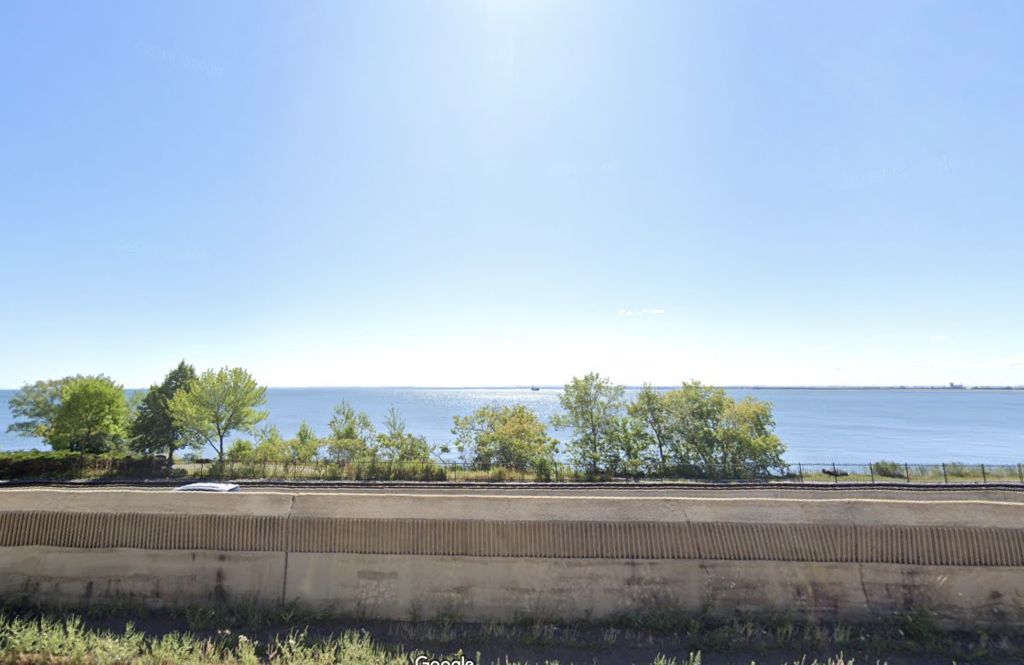
In 2022, the event will run from Sept 16th through Sept 18th, a three day event. Register here if you’re interested! You’ll not only get to meet like-minded skaters but also see beautiful scenery along the shore of one of the icons of the North American landscape.
How To Train For A Rollerblading Marathon?
Rollerblading marathons are becoming increasingly popular, with events being held worldwide. Rollerbladers of all ages and abilities can participate, and the atmosphere is always very supportive. If you’re thinking of trying it, here’s everything you need to know.
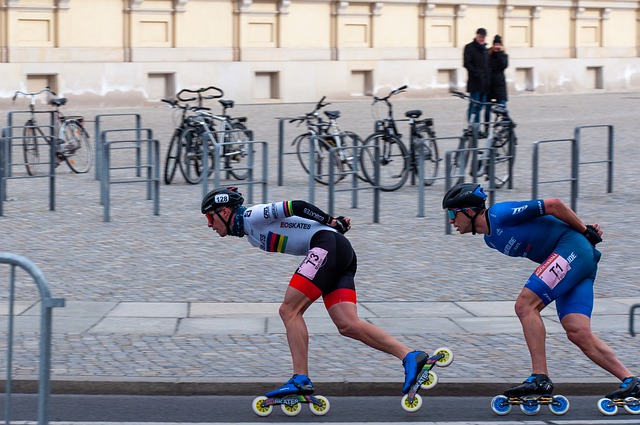
Rollerblading marathons are usually around 26 miles long, just like running marathons. However, shorter distances like half-marathons are also available, so you can choose an event that’s right for you. The great thing about Rollerblading is that it’s low-impact, so it’s kinder on your body than running. And because you’re using your whole body to move, it’s a great workout for your legs, arms, and core.
Rollerblades are available to rent at most marathons, so you don’t need to own your pair. And don’t worry if you’ve never Rollerbladed before – there will be plenty of people in the same boat. Just take things slowly and build up your speed as you become more confident. Remember to dress for the weather – it can get hot when you’re skating for hours! – and make sure your blades are well-maintained. Here are a few ways to train yourself for rollerblading marathon:
Do Cardio
Rollerblading is a great way to get cardio exercise while enjoying the outdoors. However, if you’re training for a marathon, you must ensure that you’re getting enough cardio in your workout routine. Cardio is essential for endurance and will help you to maintain your pace during the long race. It’s also important for preventing injuries, as it helps to increase blood flow and reduce inflammation.
Cardio is essential for rollerblading marathon training. When you are rollerblading, your heart rate will significantly increase. This will help to improve your endurance and also help to reduce the risk of cardiovascular disease. Cardio will also help burn calories and fat, leading to weight loss. Rollerblading is an excellent way to get cardio exercise, and it is also a lot of fun. If you are training for a marathon, include cardio in your training program. Cardio will help you to reach your goals and have a successful race.
Get Maximum Strength
Studies have shown that cardio paired with strength training results in greater, synergistic fitness gains.
Strength training is very important for rollerblading marathon training. It helps improve your endurance and skating speed. Strength also helps you skate hills without getting as tired. You can build strength by running, biking, weight lifting, and other activities that work the large muscles in your legs. Working on your endurance will help you build the strength needed for rollerblading marathon training.
You can do this by running or biking long distances at a moderate pace. You should also skate as often as possible to get your muscles used to the movement and to build up your endurance. Be sure to gradually increase the distance and intensity of your workouts so that your body has time to adjust and avoid injury. Strength and endurance are essential for rollerblading marathon training, so focus on these areas in your training program.
Be Flexible
Flexibility is essential for rollerblading marathon training. It enables the muscles to work at their fullest range of motion and reduces the risk of injury. The most common injuries in rollerblading are due to either overuse or lack of flexibility.
Skaters with insufficient flexibility are more likely to suffer from strains and tears in the muscles. This is because the muscles cannot work at their full range of motion, which puts extra stress on the tendons and joints. In addition, tight muscles are more susceptible to cramping. Flexibility is therefore essential for both preventing and managing injuries.
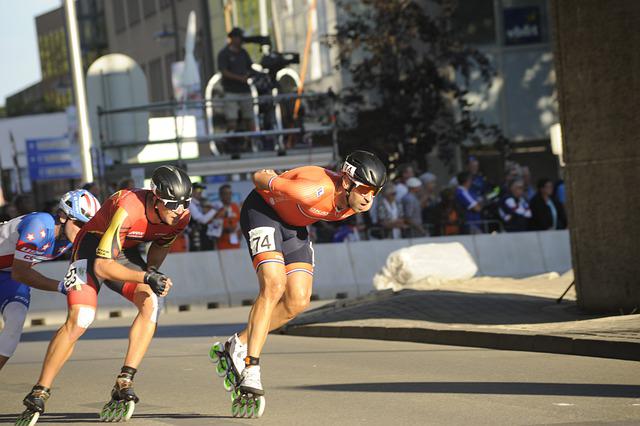
Skaters training for a marathon must be especially aware of the importance of flexibility. Rollerblading is a high-impact sport, and the repetitive nature of the skating motion can lead to tightness in the muscles. This can be detrimental to performance and can even lead to burnout. Marathon training requires skaters to sustain a high level of activity for long periods, so they must maintain good flexibility to stay healthy and perform at their best.
How Long Does It Take To Rollerblade A Marathon?
Rollerblading a marathon is no small feat. If you’ve ever done any long distance running, you know to push yourself for hours through 26 miles is exhausting. Running at the leisurely pace of a 10-minute mile, or 6 miles an hour, you can expect to finish the race between 4 and 5 hours. Inline skating expect to finish the race in less than 3 hours. If you can’t do that, then consider starting with a shorter event.
First, you need to have a good pair of rollerblades that fit well and offer good support. Second, you must be in good physical shape and have strong leg muscles. Third, you must know the route well to plan your pace and avoid obstacles.
Finally, you need the mental discipline to push yourself to keep going when the going gets tough. If you can hit all these marks, you stand a good chance of finishing a marathon in record time.
So You Want To Skate Your First Marathon …
Legend has it that 2,494 years ago the Greek soldier Phidippides ran approximately 26 miles from the plain of Marathon to Athens to alert the city about a great military victory. Unfortunately, he died just after delivering his message. While this story is not deemed historically accurate, it is certainly true Phidippides would have had an easier time covering that distance today … on inline skates.
Benefits of Skating a Marathon
Marathons are the hottest trend sweeping the inline skating world. New marathons have been started or are planned in locations as diverse as Brazil, Nairobi, and Disney World; a new online training program specific to skating marathons debuted in 2003; and the Berlin Marathon recently hosted a record 9,612 inline participants. The vast majority of marathon participants are regular recreational skaters.
Skating 26.2 miles (42.2 kilometers), the marathon distance event, is undoubtedly easier than running it. Roughly speaking, it takes about half the time to both train for and complete a skating marathon. As an example, the world record for a running marathon is two hours six minutes. Pro inline skaters can sometimes finish the event in less than one hour.
In addition to the relative ease of completing a skating marathon, there are a number of other benefits that might induce you to participate in this trend. Marathons are a great way to provide motivation and a goal in training. The events themselves are usually fun-filled weekends offering chances to mix with other participants from around the globe. Marathons offer an excellent opportunity to travel to fun locations. And skating with others is a great way to watch and improve your technique.
Training for the Marathon
While skating a marathon is easier than running one, the effort still requires proper training. In fact, not training properly is one of the best ways to get injured either before or during the race. Following are a few items to consider when planning your marathon training schedule:
Current Fitness Level: If you are not currently active, you should consult your doctor before beginning any type of training program. If you are already regularly walking, playing tennis, bicycling, skating, or doing some other form of aerobic exercise you are likely ready to start your training.
Skating Technique: While many readers of this magazine will be well prepared to skate a marathon, others might ask themselves if they are technically skilled enough. Two simple questions will help here. Can you brake effectively? Can you skate one mile without difficulty at an eight mile-per-hour pace (7.5 minutes per mile)? If the answer is “yes” to both these questions, you are likely ready to start training for a marathon. Even for those of you already technically prepared, improving your stride will pay large dividends over a 26-mile race.
Length of Training Program: Let’s face it: Many skaters could go out and skate a marathon without any training. However, that might be both painful and dissatisfying. A training program allows you to mentally and physically prepare for a marathon to make sure the event is both safe and fun. How long you will need to train depends in large part on your goals, your current fitness level, and your skating ability. If you have a reasonable fitness level, already know how to skate moderately well, and just plan to finish a skate marathon you should plan on about six weeks to prepare. If you are just starting a fitness program, are an absolute skating beginner, or are shooting for a specific goal (winning your age division, etc) you should double or triple that estimate.
Training Components: LSS, Hills, Fartlek: Perhaps the most common error skaters make when training for a race is not varying the training schedule. Your body adapts to whatever requirements you give it. Even if you are skating 20 miles per day for four days a week at a moderate pace, this is all you are training your body to do. By varying your training schedule, you will prepare your body to deliver performance in a variety of circumstances.
- The Long Slow Skate (LSS) is the key component of a marathon training schedule. You should plan to do a LSS once per week at a pace slower than you would normally train. Many skaters always want to skate fast but by doing this you are only teaching your body to perform at a high aerobic level. It is equally important to teach your body to perform for long periods of time. In this workout you start at a distance you can currently skate without difficulty and gradually increase this distance over your training period. For example, an experienced skater might start a weekly LSS of 20 miles and increase this five miles per week over an eight-week training program. Remember to skate slowly!
- The word “fartlek” is Swedish for “speed play”. It is a form of interval training, which is skating repeated for short distances at a high speed. In Fartlek training, the distances are varied and the effort level is varied, making it generally less boring and more effective than standard interval training. Because most of us skate on roads or paths and not a track, Fartlek training is also more applicable than is interval training, which often occurs on a track. The goals of Fartlek Training are to condition your body to skate at high speeds and to increase your fitness level by pushing yourself beyond your normal aerobic capacity. When you do a fartlek workout, you start by picking an object ahead of you such as a tree, house, or telephone pole. This can be anywhere from 100 yards to ¼ mile ahead. Sprint to that point and then reduce your speed to a LSS pace. Recover fully and then pick another object ahead of you at whatever distance you choose. Your effort should be at about 90% during the sprint portions of your skate.
- Another component of your training program is a hill workout. Clearly, skating up and down hills prepares you for any hills you encounter during an actual race. Additionally, hills are a great way to increase the intensity of a workout in a manner similar to fartlek workouts. In fact, it is possible to alternate fartlek with hill workouts, doing one each week. In a hill workout, make sure you pick a safe hill with clear visibility and a long runout at the bottom. Start by skating only part way up the hill and then returning back down. If you are comfortable with this, continue farther up the hill. Note that you are working out on the uphill portion and resting on the downhill portion.
Rest: If always skating at one pace is the most common error in a training program, lack of rest is probably the most serious error. Overtraining can lead to injury and, possibly, keep you from ever reaching the starting line. When planning your rest consider these things.
- You should have one or two rest days in your weekly training schedule. This allows your body to recover from its efforts and gives you a needed mental break from skating. (If you don’t need time to recover you are likely not working hard enough.)
- It is also a good idea to include cross-training workouts in your training schedule. By participating in a different activity, you will use different muscles and still ask your body to perform. Depending on your needs, you might add in cardio (biking, running, etc) or non-cardio (weights, yoga) workouts to your schedule.
- Finally, you should plan to “taper” prior to your race by reducing your exercise and increasing your rest. This should begin two weeks prior to your race just after your longest LSS; in other words, you should not skate your longest LSS one week prior to the race. In addition, during the final week you should reduce your skating and other workouts and increase your rest days. It is still important to exercise but better to workout for shorter, more intense periods.
Training with Others (Drafting) Because drafting behind another skater reduces wind resistance approximately 30%, advanced and pro skaters spend the entire 26.2-mile marathon in a pace line. Recreational skaters, who compose the vast majority of marathon participants, almost invariably skate on their own. Learning to skate with others in a pace line (after mastering a fitness stride) is one of the key steps in completing a marathon in a faster time. Simply put, there is no better way to learn to skate with others than to go do it. Join any inline skating club and you will find other skaters at your ability level and, better yet, those more advance than you who can teach you to skate in a pace line.
At the Event
Once you make it through the training program, of course, the real event is just beginning. Some marathons might only have 100 participants and seem manageable to the first-time marathoner. Other events will have thousands of skaters and be somewhat daunting. Following are a few tips for preparing for the actual event.
The Night Before
- Equipment: You should prepare your equipment and clothing the night before: make sure your skates are in order; decide what clothes you will wear; put your timing chip on your skates; and pin your race number on your t-shirt. The more you prepare the night before, the better you will sleep!
- Sunglasses: Think about whether you will need sunglasses. What time does the sun rise as compared to when you will start and finish the race? Which direction will you be skating? Many skaters prefer having sunglasses.
- Dinner: Eat a healthy and carbohydrate-heavy dinner. Skip or go light on the alcohol. Drink lots of water because hydrating for the race starts the night before. Consider in advance whether you will cook or eat out so that you aren’t stuck running to the store for ingredients.
- Organizing Breakfast: Organize your breakfast the night before. It is best to plan this and purchase the necessary items the day before rather than winging it the morning of the race.
- Alarm Clocks: Set two alarm clocks. Even if one is enough for you, two will give you peace of mind.
- Mental Preparation: Have you ever heard of visualizing your success in advance? It really works! Think about your race and how you will do. Visualize yourself as you stride properly, cruise up the final hill, or strongly cross the finish line.
Race Morning
- Breakfast: Eat a good breakfast and perhaps bring along an extra pre-race or during-the-race snack such as an energy bar.
- Timing: Make sure you give yourself enough time so as not to be rushed but not so much that you end up sitting around for hours waiting for the starting gun. At large races, this can be difficult to judge and depends, in part, or your own stress level.
- Extra Clothes: Remember to bring enough clothes for a possible early-morning chill. You will be up much earlier than the race actually starts. Carry your skates with you to the start line if a baggage service is provided. You don’t want to be wearing your skates an extra two hours!
- Warmup & stretching: Give yourself enough time and space for a short warmup followed by stretching. At big races with thousands of skaters, finding a good warmup location can be difficult.
- Hydration: Drink water upon waking and then immediately again before the race starts. Most races provide water en route but you might consider wearing a hydration pack or carrying one water bottle.
- Bathroom: Try to go to the bathroom shortly before the race starts so that you don’t have to go during the race.
- Calm Yourself: Take a few minutes just before the race to collect your thoughts, take a few deep breaths, and think about your upcoming race. Mentally prepare yourself to do well and your body often follows!
Post-Race Strategies
- Stretch: You should stretch after skating to eliminate post-race stiffness as much as possible.
- Eat and Drink: Most races provide post-race refreshments. Grab something to eat and drink within the first 10 minutes and then plan on having a meal within an hour or so of your finish.
- Cheer on Others: Consider returning to the finish line to cheer on other skaters. Get in the spirit!
- Enjoy the Day! Most importantly, no matter how you finished, enjoy the day. In an age of rampant obesity, you should be proud that you trained for and skated a marathon. 26.2 miles!
About the Author
Allan Wright is the owner of Zephyr Inline Skate Tours and the organizer of Camp Rollerblade. He is also the administrator of MarathonSkating.com, a six-week online training program that is offering its services for free to participants of several featured marathons in 2005.
Wrapping Up
In conclusion, rollerblading marathon training is a great way to get in shape and have a successful race. It is important to focus on building strength, endurance, and flexibility in your training program. Be sure to gradually increase the intensity and distance of your workouts so that your body has time to adjust. If you can hit all these marks, you stand a good chance of finishing a marathon in record time.
You can also read:
Fitness Fun: The Benefits and Diversity of Inline Skating
Preparing for an Inline Skating Marathon
Inline Skating for Kids – 23 Games to Keep Them Entertained
Inline Skating Words and Definitions
